Saturday, August 10, 2013

Judith Leiber: The First and Last Name in Handbags


Her name could quite easily have been on display at Yad Vashem. Instead it appeared on “Sex and the City.” This is the story ofJudith Leiber, a story that was almost written very differently.
Judith Peto was born in Budapest in 1921. At the time one in every four of the city’s residents was Jewish. While Hungarian Jews faced some discrimination, most of Budapest’s doctors, lawyers, musicians, journalists and writers were Jews. In total there were about 600,000 Jews in Hungary, which was equivalent to 7 percent of the country’s population.
In March 1944, when Judith was 22 years old, however, her life and that of many other Hungarian Jews changed forever: German troops invaded Hungary. As a Jewish young woman, of course, she was at great risk when Nazi tanks rolled into her hometown.
World War II was a terrifying experience for many people, across much of the globe, for many reasons. But in few places did Nazi occupation have as immediate, devastating results as it did in Hungary. So Judith was in great danger.
Jews in the Hungarian provinces were ghettoized in April and May of 1944. Between May 15 and July 8, more than 400,000 Hungarian Jews from outside of Budapest were sent to concentration camps (primarily Auschwitz). Nowhere was the pace of the destruction of Jewry as quick as in Hungary.
Meanwhile, Jews like Judith in Budapest faced severe anti-Semitism. And in June 1944, the Hungarian authorities ordered the city’s Jews into over 2,000 designated buildings marked with Stars of David scattered throughout Budapest. Still, for a short time they were insulated from ghettoization and systematic deportations afflicting other Hungarian Jews.
In October 1944, it appeared that the war was almost over. Germany was close to defeat and Hungary looked set to proclaim peace with allies. But then the Arrow Cross, a pro-Nazi Hungarian fascist party, staged a coup d’état. In November 1944, the Arrow Cross forced the Jews of Budapest into a ghetto around the Dohány Street Synagogue.
Deportations started almost immediately after the establishment of the ghetto. In less than three months of existence, over half of the ghetto’s inhabitants were sent to concentration camps. All this time, Judith was in hiding.
As Judith lay low, the Hungarian fascists perpetrated a bloodbath in Budapest itself. Between December 1944 and the end of January 1945, they took as many as 20,000 Jews from the ghetto, shot them along the banks of the Danube and threw their bodies into the river. To save bullets, the Arrow Cross only shot every other Jew; the others they threw in alive.
From German occupation in March 1944 to Hungary’s liberation in January 1945, the Jewish population of Budapest was reduced from approximately 200,000 to 100,000. Yet compared to other European towns and cities, the community had got off lightly.
After Judith came out of hiding, she met a young American soldier in the streets of Budapest. Gerson Leiber, born in Brooklyn in 1922, was part of the allied troops in the city after the city was liberated from the Nazis and their collaborators. Despite their different experiences, the two soon fell in love and after a whirlwind romance Judith Peto became Judith Leiber and moved to America as a GI bride.
The young couple arrived in New York City with big dreams. Gerson was a painter looking to live off his work. And Judith had already established herself as a talented designer having become the first female apprentice and master in the Hungarian handbag guild. In her new country, she took a job working for Nettie Rosenstein, the fashion designer famous for creating the little black dress.
In time, Judith’s designs for other labels became rather well known and her handbags appeared in prominent fashion magazines like Harper’s Bazaar and Vogue. In 1953, Judith designed a glittering pink bag for American first lady Mamie Eisenhower to wear at her husband Dwight’s inaugural ball. Thereafter, Judith has sent every first lady a handbag. For Bill Clinton’sinaugurations, she made Hillary Clinton a bag in the shape of the White House cat, Socks.
By 1963 it was time to go it alone. Judith founded her own label, Judith Leiber, where she worked alongside Gerson. At first the husband and wife team were the company’s sole employees. Judith was responsible for all the design work and production of the bags, while Gerson delivered the merchandise to major department stores. When the couple used a factory with four employees, Judith worked alongside them and taught them her expertise.
“There was such a sense of camaraderie,” Judith recalled, “with all of us working together, producing these handbags. I made my first line in a gray-green calf which was not that well received. Nevertheless, I was determined to make my bags as beautiful and as well as I could and not to compromise. I have never swerved from that goal. Never.”
With an uncompromising approach, soon the name Judith Leiber became an iconic American luxury brand synonymous with opulent style and high-end sophistication. As well as first ladies, many prominent arbiters of fashion became devoted collectors of Judith Leiber bags.
In addition to celebrity clients, many prestigious museums began to collect Judith Leiber designs and to exhibit the bags as part of their permanent collections. Among such museums are The Metropolitan Museum of Art, The Smithsonian, The Corcoran Gallery and The Victoria and Albert Museum.
Success begat success and in time the Hungarian immigrant who escaped the Nazis and her Brooklyn-born husband were living on Park Avenue. She had lived in hiding in Budapest. Now to escape the city heat, they would summer in the Hamptons.
By 1993, the brand had become so well respected and profitable that the Leibers received an offer to buy the brand that they couldn’t refuse from a British company. Judith’s name had once been on a Nazi list of Jews to be exterminated; now it was worth millions of dollars.
Although new Judith Leiber bags continued to be sold after the company’s sale in 1993, they are no longer her personal designs. Judith and Gerson—who still paints and exhibits his work—established a museum, the Leiber Museum, in the East Hampton farmhouse they bought in 1956 (the year, coincidentally, of the Hungarian revolution against the Soviet Union). There, at the Leiber Museum, they exhibit her designs and his paintings. Entry is free of charge to the public.
The couple just wants to share their work—their shared life’s work. The couple had no children but their name lives on in their work. Showing how invested she remains in her designs, Judith now spends much of her time buying back her bags for display at their museum. “They [the bags] are my children," Judith Leiber told a reporter, "and there is no college tuition and nobody talks back."

Monday, August 5, 2013

JEWISH TRIVIA >>


The Roosevelts were Jewish Dutch, arriving in NYC in 1682 (Originally name Claes Rosenvelt before name change to Nicholas Roosevelt) Sarah Delano, FDR's mother, was descended from Sephardic Jews.

Joseph Stalin was originally named Joseph David Djugashvili (translating into "son of a Jew.") All 3 of the women he married were Jewish.

Dwight Eisenhower's father was a Swedish Jew and was so identified in the West Point Yearbook of 1915.


INTERESTING JEWISH FACTS

1. Lillian Friedman married Cruz Rivera. They named their baby Geraldo Miguel Rivera (Funny, it doesn't sound Jewish.) Since, according to Jewish Law, anyone born to a Jewish mother is Jewish, Geraldo Rivera is Jewish. As
Were, among others: Fiorello Laguardia, Winston Churchill and Cary Grant, as Explained below.

2. Fiorello Laguardia's mother's name was Jacobson. His father was not Jewish. Laguardia spoke seven languages -- including Hebrew and Yiddish - fluently.

3. Winston Churchill's mother's name was Jenny Jerome.

4. Cary Grant 's mother, Elsie, was Jewish. His father, Elias Leach, was not. Grant's original name was Archibald Alexander Leach. (Robin Leach is hisFirst cousin).

5. Peter Sellers' mother, Margaret Marks, was Jewish. His father, Bill Sellers, was Protestant. Peter's real name is Richard Henry Sellers.

6. David Bowie's mother is Jewish, his father is not. One of Bowie 's album covers discusses his Jewish ancestry. His real name: David Stenton Haywood Jones.

7. Robert DeNiro's mother is Jewish; his father is not.

8. Shari Belafonte's mother is Jewish. Her father, Harry, has a Jewish Grandfather.

9. Olivia Newton John's Jewish grandfather was a Nobel Prize winning Physicist.

10. Harrison Ford's mother is Russian Jewish, his father is Irish Catholic.

ALWAYS GOOD TO KNOW AND REMEMBER!

Fact: The first theater to be used solely for the showing of motion pictures was built by a Jew (Adolf Zukor).

Fact: The first full-length sound picture, The Jazz Singer was produced by the Jewish Samuel L. Goldwyn & Louis B. Mayer (MGM).

Fact: A Jew (Dr. Abraham Waksman) coined the term antibiotics.

Fact: A Polish Jew (Casimir Funk) who pioneered a new field of medical research gave us a word now common in our language -- vitamins..

Fact: The first successful operation for appendicitis was performed by a
Jewish surgeon (Dr. Simon Baruch)

Fact: The doctor (Dr.. Abraham Jacobi) hailed as America 's father of Pediatrics was a Jew.

Fact: Until a Jewish doctor (Dr.. Siccary) showed differently, Americans believed the tomato was poisonous.

Fact: Jewish Levi ["Levi's"] Strauss (inventor of jeans) is the largest clothing retailer in the world.

Fact: In 1909, four Jews were among the 60 multi cultural signers of the Call to the National Action, which resulted in the creation of the NAACP.

Fact: A Jew (Emile Berliner) is the man who developed the modern day phonograph. While Thomas Edison was working out a type of phonograph that used a cylinder as a record, Berliner invented a machine that would play a disc. The machine he patented was called the gramophone, and the famous RCA trademark is a picture of a dog listening to "his master's voice" on Berliner's device. The gramophone was superior to Edison 's machine. In short, Emile Berliner made possible the modern record industry. His company was eventually absorbed by the Victor Talking Machine Company, now known as
RCA.

Fact: Jewish Louis B. Mayer (MGM) created the idea for the Oscar.

Fact: European Jews are the founding fathers of all the HollywoodStudios.

Fact: Jews comprise a mere 1/4 of 1% (13 million) of the population (6
Billion).

Fact: 99% of the world is non Jewish.

Fact: Three of greatest & most influential thinkers dominating the 20th
Century were Jewish - Einstein, Freud, and Marx.

Fact: The most popular selling Christmas song ("White Christmas") was written by a Jew. (Irving Berlin)

Fact: Of the 660 Nobel prizes from 1901 - 1990, 160 have been won by Jews.
In the end, Jews win more Nobel prizes than any other ethnicity. They win
40x more than should be expected of them, based upon their small population
numbers.

Fact: A Jew (Dr. Jonas Salk) is the creator of the first Polio Vaccine.

Fact: Jews (Hayam Solomon & Isaac Moses) are responsible for creating the
first modern banking institutions.

Fact: Jews also created the first department stores of the 19th century:The
Altmans, Gimbels, Kaufmanns, Lazaruses, Magnins, Mays, Strausses became leaders of major department stores. Julius Rosenwald revolutionized the wayAmericans purchased goods by improving Sears Roebuck's mail order merchandising. Hart, Schaffner, Marx, Kuppenheimer and Levi Strauss became
household names in men's clothing
Fact: Jewish Marc Chagall (born Segal , Russia ) is one of the great 20th
century painters.

Fact: English Jewish financiers such as Isaac Goldsmid, Nathan Rothschild, David Salomons, and Moses Montefiore, whose fortunes helped Englandbecome an empire.

Fact: In 1918, Detroit , a Jew (Max Goldberg) opened the "first" commercial
parking lot.

Fact: In 1910, a Jew (Louis Blaustein) and his son opened the "first" gas
station, eventually founding AMOCO OIL. One of the richest oil families in the world.

Fact: A Jew (Dr. Albert Sabin) developed the first "oral polio vaccine."

Fact: A Jew (Steven Spielberg) is the most successful filmmaker since the
advent of film.

Fact: A Jewish poet's (Emma Lazarus) famous poem,
�The New Collossus� appears as the inscription on the Statue Of
Liberty

Fact: Jewish Harry Houdini (Weiss) is the father of Magic/Illusion.


Fact: Jewish Abraham is the father of the world's 3 major religions:
Judaism, Christianity & Islam (ancestors of the Hebrew & Arabic peoples).
Fact: Jews are the oldest of any people on earth still around with their national identity and cultural heritage intact.

Fact: George & Ira Gershwin & Irving Berlin (Jews) are three of the most
prolific composers of the 20th century.
Fact: Isadore & Nathan Straus (Jews) - "Abraham & Straus," eventually became
sole owners of Macy's (world's largest department store) in 1896.

Fact: Dr. Paul Ehrlich (Jew) - physician, Nobel Prize in 1908 for curing syphilis.

Fact: Armand Hammer (Jew) - "Arm & Hammer," physician & businessman originated the largest trade between U. S. and Russia ...

Fact: Louis Santanel (Jew) was the financier who provided the funds for
Columbus ' voyage to America ..

Fact: Sherry Lansing (Jew) of Paramount Pictures, became the first woman
president of a major Hollywood studio.

Fact: Flo Zigfield (Jew) of "Zigfield Follies," is the creator of American
burlesque.
 

Thursday, August 1, 2013

Berthold Beitz, German Who Saved Jews, Dies at 99


Berthold Beitz, German Who Saved Jews, Dies at 99

Industrialist Prevented Deportation of Polish Jews

By JTA

Published August 01, 2013.
German industrialist Berthold Beitz, who rescued Jewish workers in occupied Poland by employing them during World War II, has died.
Berthold Beitz
Berthold Beitz
Beitz’s death Tuesday at the age of 99 was announced by the foundation he headed, the Alfried Krupp von Bohlen und Halbach Stiftung.
In 1942, Beitz was working in Borislaw, Poland, as commercial director for a German oil company when he prevented the deportation of Jews to a death camp. The tall, blond-haired, blue-eyed German repeatedly insisted that Jewish men and women be sent to his offices and factories as “armaments workers,” according to the Frankfurter Allgemeine Zeitung. He and his wife, Else, also hid Jewish children in their house and managed to get the local SS governor to allow Beitz to divert further Jews from deportation.
When asked if he had feared for the lives of his wife and their daughter, Beitz once said that he felt as if he were two people: the one who worried and the other who “didn’t think but just acted,” the Frankfurter Allgemeine Zeitung reported. Not all the Jews he helped ultimately survived, but several hundred reportedly were saved. Beitz and his wife were both honored by Yad Vashem as Righteous Gentiles — he in 1973 and she in 2006. The Central Council of Jews in Germany gave the couple its highest award, the Leo Baeck Prize, in 1999.
When Beitz reflected upon his wartime experiences many years later, he said that his actions were not motivated by anti-fascism or resistance to the Nazi regime.
“We experienced firsthand what was happening to the Jews of Borislaw, from morning to night,” he said, according to the Yad Vashem website. “If you see how a woman with a child on her arm is shot, and you have a child yourself, you have a completely different reaction.”
Beitz was general manager of the Essen-based Alfried Krupp von Bohlen und Halbach company, and an influential industrialist in the steel industry of the Ruhr Valley. He was also honorary chairman of the ThyssenKrupp Supervisory Board.
His passing this week brought words of condolence from Jewish leaders and German Chancellor Angela Merkel.
Germany “lost one of its most respected and successful entrepreneurs,” Merkel said in a statement Wednesday. She praised his ”courageous and exemplary intervention to rescue Jewish workers during World War II” and his postwar efforts to build connections with Eastern Europe.
“Berthold Beitz was a light and a role model in the darkness of the murderous Nazi period,” Dieter Graumann, head of the Central Council of Jews in Germany, told the Juedische Allgemeine, Germany’s Jewish weekly. Beitz proved “that you could certainly remain human in that time, if you really wanted to.”


Read more: http://forward.com/articles/181573/berthold-beitz-german-who-saved-jews-dies-at-/#ixzz2alEoJSvX

Wednesday, July 31, 2013

Jewish Routes | Washington, DC


Jewish Routes | Washington, DC

Jews have had a major presence in Washington, DC, ever since young land speculator Isaac Polock arrived in 1795 and built six stately homes along present-day Pennsylvania Avenue in Foggy Bottom. These buildings would later house celebrated Americans such as President James Madison and Abraham Lincoln’s secretary of state, William Seward. Jewish merchants, many from Germany, soon followed, selling goods from small establishments along 7th Street to meet the needs of the residents of the nation’s new capital on the Potomac.
At first the trickle was slow. In 1843, there weren’t even 10 men to make a minyan at the funeral of the infant son of Captain Alfred Mordechai, the commander of the Washington Arsenal. But by 1852, Jews were plentiful enough to found the city’s first synagogue, the Orthodox Washington Hebrew Congregation. During the Civil War, Washington’s 200 Jewish inhabitants were joined by Jewish soldiers, government clerks and others seeking commercial opportunities. Among them was Adolphus Solomons (1826-1910), an observant Sephardic Jew active in politics. In 1862,  his Pennsylvania Avenue bookstore served as a base for the successful protest of then-General Ulysses S. Grant’s general order No. 11 to expel Jews from the Middle Mississippi Valley. In 1871, Solomons turned down the governorship of DC because he was afraid it would require him to work on Saturdays. He later co-founded the Red Cross with Clara Barton.
By the end of the Civil War, 2,000 Jews resided in Washington. There was a B’nai B’rith Lodge, a Jewish literary society, six kosher restaurants and a plethora of expanding Jewish businesses. The Lansburgh brothers opened a shop near 7th Street NW in the central part of the city, and in 1882 constructed a department store, which boasted the city’s first elevator. The ancestors of journalist Frank Rich opened Rich’s Shoes, which became a local chain. By the turn of the century, there were many new synagogues: the by-then Reform Washington Hebrew was located at 8th and I; the Orthodox-turned-Conservative Adas Israel Congregation at 6th and G, then 6th and I; and the Orthodox Ohev Shalom at 5th and I. “You had the full spectrum of Jewish practice within three blocks,” says Laura Cohen Apelbaum, executive director of the Jewish Historical Society of Greater Washington, adding that most synagogues were identified by street intersections.
Jews were not clustered in one neighborhood the way they were in New York. “People are always asking ‘Where is Washington’s Lower East Side?’ Instead, Jews lived near their businesses along major thoroughfares in all four quadrants of the city: Northwest, Southwest, Northeast and Southeast,” says Apelbaum. Synagogues sprang up alongside Jewish homes, among them Orthodox Kesher Israel in Georgetown (still an active congregation) and Talmud Torah in Southwest, the Orthodox synagogue where The Jazz Singer Al Jolson’s father was the cantor. In the 1920s, the community banded together to build the Jewish Community Center, centrally located at 16th and Q, NW, walking distance from the White House. President Calvin Coolidge spoke at the cornerstone ceremony in May 1925.
While dealings between Jews and the city’s other residents were generally cordial, there was still plenty of anti-Semitism. Jewish store proprietors faced higher prices and restrictions on advertising, leading some to form a co-op called District Grocery Stores (DGS, namesake of a trendy new delicatessen near Dupont Circle). Some of the city’s major cultural institutions kept Jews at bay, and certain neighborhoods were closed to them through restrictive deeds and gentlemen’s agreements with local banks that prevented them from getting mortgage loans. Certain professions were off limits, so most Jews found careers in business, real estate or entertainment. “You couldn’t get a job at Woodies [the now-closed Woodward and Lothrop department store] if you were Jewish,” says Apelbaum. “At private law firms, people were asked to change their name. There were Jews in government, but it varied agency by agency. You could, for example, work at Labor but not so easily at State.”
While the Depression didn’t hit Washington as hard as elsewhere, the New Deal was transformative. Young idealistic Jewish professionals and intellectuals flocked to the city and many national Jewish organizations—including B’nai B’rith—set up offices. World War II brought another massive influx of Jews. “A swarm of people arrived to work for the government, bringing new voices, skills and geographic diversity,” says Apelbaum. “It changed the whole city.” Many of the newcomers were women recruited to fill the jobs of men serving in the war. Jewish “government girls” often lived in kosher boarding houses.
Washington has always been unique in that its Jews have a front-row seat to power. “For Washington Jews, local and national politics were intertwined,” says Apelbaum, adding that local Jews learned early on to use their influence to take on political tasks for American Jewry as a whole. For example, when 700 Polish-Jewish orphans were stranded in Iran after escaping Europe in 1943, Hadassah’s Washington representative, Denise Tourover, asked the wife of  Secretary of the Treasury Henry Morgenthau to talk to her husband. The children were released and sent to Palestine.
 The city’s Jews were active behind the scenes in the formation of the State of Israel. Before the 1947 UN vote to partition Palestine, neurosurgeon Harvey Ammerman convinced one of his patients who served at the Chilean embassy to encourage Chile’s ambassador to the UN to abstain rather than vote against partition. Ammerman also helped win the vote of the Guatemalan ambassador. David Ben-Gurion often traveled to Washington, and the city was abuzz with secret meetings and massive fundraising. The late Abe Pollin—philanthropist, real estate developer and one-time owner of Washington’s basketball and hockey teams—recalled accompanying his father to purchase arms for Israel as well as the boat that became the Exodus, says Apelbaum. On the day that Israel was proclaimed a state, the community gathered outside the Jewish Agency building on Massachusetts Avenue. Soon after, local Jewish developers Leo Bernstein, Abraham Kay and Garfield Kass selected a nearby building for Israel’s first embassy.
A severe housing shortage after World War II led Washingtonians of all faiths to move to the Maryland and Virginia suburbs. A 1956 study showed that more than half of the region’s 81,000 Jews had moved to homes outside the city, many of them built by local Jewish real estate developers. Shopping malls followed, and soon, so did communal organizations such the Jewish Community Center, which relocated to Rockville, Maryland.
During the tumultuous 1960s, the region’s Jews strongly supported the civil rights movement, including the historic March on Washington. The riots that shook the city after the 1968 assassination of Martin Luther King, Jr., destroyed many of the remaining Jewish-owned small businesses, leaving some neighborhoods in ruins. Jews active in local politics were among those who fought for home rule, which came in 1973, allowing city residents to elect their mayor and city council members for the first time.
It took decades for the city’s long-sought economic renaissance to occur. By the 1990s, Jews were among the vanguard changing Washington from a sleepy, provincial town to a cosmopolitan metropolis with a  revitalized downtown and a rich array of neighborhoods with distinct characters and innumerable options for great food and culture. While many Jews remain in the suburbs (Northern Virginia is home to the metropolitan area’s fastest-growing Jewish population), there has been a large migration of Jews back into the city. Many of the buildings once abandoned by the Jewish community have found new life. Adas Israel’s first building at 6th and G was moved a few blocks away to become the Lillian and Albert Small Jewish Museum. The JCC on 16th Street reopened and now flourishes in its original building. The Jewish Primary Day School has moved into the building once occupied by the Washington Hebrew Academy. Adas Israel’s second home at 6th and I has been transformed into a hub of cultural and religious activity a stone’s throw from 7th Street, now one of the city’s trendiest neighborhoods. With at least 215,000 Jews, the capital region is now the sixth-largest Jewish community in the United States.

Tuesday, June 4, 2013

Israel’s Top 45 Greatest Inventions Of All Time


Israel’s Top 45 Greatest Inventions Of All Time

Posted on 5/28/2013 by
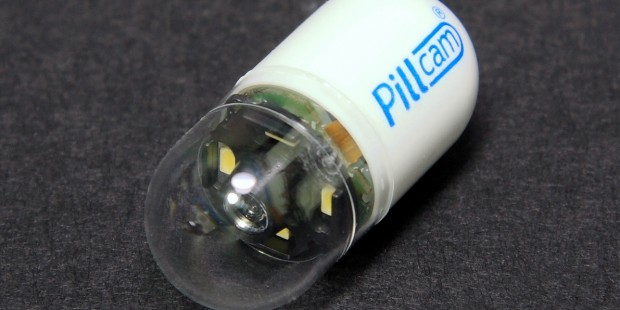
Pillcam

By Abigail Klein Leichman: Israel21c
A new exhibit pays homage to Israeli ingenuity behind gadgets like the Disk-on-Key, PillCam, solar windows and a space camera.
One of Israel’s sources of pride is the enormous number of inventions and innovations that have taken root on its soil over 63 years — despite challenges of geography, size and diplomacy. The ever-churning Israeli mind has brought us drip irrigation, the cherry tomato, the electric car grid, the Disk-on-Key and much more.
Through December at the Bloomfield Science Museum in Jerusalem, 45 indispensable Israeli inventions are being displayed and demonstrated. Curator Varda Gur Ben-Sheetrit tells ISRAEL21c that hundreds of ingenious inventions were considered for Inventions, Inc., which offers visitors a chance to learn more and try their own hand at coming up with something new.
She emphasizes that many other Israeli inventions are deserving of being included. “We were, of course, constrained by space limitations, and also not every company we invited to exhibit responded,” she says.
Another feature of the exhibition is the Transparent Studio, where graduates of the Bezalel Academy of Arts and Design conduct a course on innovation in the area of light and lighting design. Visitors can observe their work-in-progress and share their ideas and suggestions with the designers.
Here, ISRAEL21c gives Israel’s top 45 inventions highlighted at the exhibition, in no particular order.
1. Given Imaging, a world leader in developing and marketing patient-friendly solutions for visualizing and detecting disorders of the GI tract, is best known for its PillCam (aka capsule endoscopy), now the gold standard for intestinal visualization.
2. Netafim is a worldwide pioneer in smart drip and micro-irrigation, starting from the idea of Israeli engineer Simcha Blass for releasing water in controlled, slow drips to provide precise crop irrigation. The kibbutz-owned company operates in 112 countries with 13 factories throughout the world.
3. Ormat Technologies designs, develops, builds, owns, manufactures and operates geothermal power plants worldwide, supplying clean geothermal power in more than 20 countries.
4. Pythagoras Solar makes the world’s first solar window, which combines energy efficiency, power generation and transparency. This transparent photovoltaic glass unit can be easily integrated into conventional building design and construction processes.
5. Hazera Genetics, a project of two professors at the Hebrew University Faculty of Agriculture, yielded the cherry tomato — a tasty salad fixing that ripens slowly and doesn’t rot in shipment.
6. BabySense is a non-touch, no-radiation device designed to prevent crib death. Made by HiSense, the device monitors a baby’s breathing and movements through the mattress during sleep. An auditory and visual alarm is activated if breathing ceases for more than 20 seconds or if breath rate slows to less than 10 breaths per minute.
7. EpiLady, the first electric hair remover (epilator), secured its leading position in the international beauty care market and since 1986 has sold almost 30 million units.
8. 3G Solar pioneered a low-cost alternative to silicon that generates significantly more electricity than leading silicon-based PV solar modules at a lower cost per kilowatt hour.
9. MobileEye combines a tiny digital camera with sophisticated algorithms to help drivers navigate more safely. The steering system-linked device sounds an alert when a driver is about to change lanes inadvertently, warns of an impending forward collision and detects pedestrians. MobileEye has deals with GM, BMW and Volvo, among others.
10. Leviathan Energy innovated the Wind Tulip, a cost-effective, silent, vibration-free wind turbine designed as an aesthetic environmental sculpture, producing clean energy at high efficiency from any direction.
11. Rav Bariach introduced the steel security door that has become Israel’s standard. Its geometric lock, whose cylinders extend from different points into the doorframe, is incorporated into doors selling on five continents.
12. BriefCam video-synopsis technology lets viewers rapidly review and index original full-length video footage by concurrently showing multiple objects and activities that actually occurred at different times. This technology drastically cuts the time and manpower involved in event tracking, forensics and evidence discovery.
13. GridON makes the Keeper, a three-phase fault current limiter developed at Bar-Ilan University. The device, which blocks current surges and limits the current for as long as required to clear the fault, won an Innovation Award from General Electric’s Ecomagination Challenge and is of interest to major utilities companies around the world.
14. Better Place electric car network, Israeli Shai Agassi’s brainchild, is implementing the Israeli pilot that will provide a model for a worldwide electric car grid.
15. Intel Israel changed the face of the computing world with the 8088 processor (the “brain” of the first PC), MMX and Centrino mobile technology. Israeli engineers at Intel in the 1990s had to convince skeptical bosses to take a chance on MMX technology, an innovation designed to improve computer processing. It’s now considered a milestone in the company’s history.
16. Disk-on-Key, the ubiquitous little portable storage device made by SanDisk, was invented by Dov Moran as an upgraded version of disk and diskette technology through the use of flash memory and USB interface for connection to personal computers.
17. TACount real-time microbiology enables the detection and counting of harmful microorganisms in a matter of minutes, rather than the conventional method of cell culture that takes several hours to a few days. The technology applies to the fields of drinking and wastewater, pharmaceuticals and food and beverage production.
18. Solaris Synergy innovated an environmentally friendly and economically beneficial way to float solar panels on water instead of taking up valuable land, generating energy while protecting and limiting evaporation from reservoir surfaces.
19. HydroSpin is developing a unique internal pipe generator that supplies electricity for water monitoring and control systems in remote areas and sites without accessibility to electricity.
20. The Volcani Research Center of the Ministry of Agriculture and Rural Development aims to improve existing agricultural production systems and to introduce new products, processes and equipment. Basic and applied research is conducted at six institutes and in two regional research centers by more than 200 scientists and 300 engineers and technicians.
21. Rosetta Green, a 2010 spinoff of the agro-biotechnology division of Rosetta Genomics, develops improved plant traits for the agriculture and biofuel industries, using unique genes called microRNAs.
22. Mazor Robotics’ Spine Assist and other surgical robots are transforming spine surgery from freehand procedures to highly accurate, state-of-the-art operations with less need for radiation.
23. The optical heartbeat monitor developed by Bar-Ilan University’s Prof. Ze’ev Zalevsky is a revolutionary medical technology using a fast camera and small laser light source.
24. Elya Recycling developed and patented an innovative method for recycling plastic based on a specialized formulation of natural ingredients. Making the new raw material for handbags, reusable totes and lumber products requires 50 percent less energy than current recycling methods and 83% less energy than virgin manufacturing.
25. Like-A-Fish unique air supply systems extract air from water, freeing leisure and professional scuba divers, as well as submarines and underwater habitats, from air tanks.
26. Itamar Medical’s WatchPAT is an FDA-approved portable diagnostic device for the follow-up treatment of sleep apnea in the patient’s own bedroom, rather than at a sleep disorders clinic.
27. Zenith Solar developed a modular, easily scalable high-concentration photovoltaic system (HCPV). The core technology is based on a unique, proprietary optical design to extract the maximum energy with minimal real estate.
28. AFC (Active Flow Control) was developed at Tel Aviv University as an intelligent gas-air mixing system to replace all existing mixing technologies.
29. The Space Imagery Intelligence (IMINT) unit of Elbit Systems makes a “space camera,” a compact, lightweight electro-optic observation system for government, commercial and scientific applications.
30. Turbulence, the world’s first hyper-narrative, interactive movie, is also the name of the company developed by Prof. Nitzan Ben-Shaul of Tel Aviv University. The technology allows the viewer to choose the direction of the film’s plot by pressing buttons on the PC, Mac or iPad at various moments in the action.
31. Decell Technologies is a global leader in providing real-time road traffic information based on monitoring the location and movement of phones and GPS devices. Swift-i Traffic, Decell’s premium product, is incorporated in leading navigation systems, fleet management services, mapping operations and media channels in several countries.
32. NDS VideoGuard technology is the pay-TV industry’s advanced suite of conditional access (CA) solutions. It protects branded service from piracy and ensures that consumers will have the choice and flexibility they demand in broadcast and on-demand content.
33. PrimeSense revolutionizes interaction with digital devices by allowing them to “see” in three dimensions and transfer control from remote controls and joysticks to hands and body. It is the leading business provider of low-cost, high-performance 3D machine vision technologies for the consumer market.
34. Takadu provides monitoring software to leading water utilities worldwide. The product offers real-time detection and control over network events such as leaks, bursts, zone breaches and inefficiencies.
35. Hewlett Packard (HP)’s Indigo digital printing presses for general commercial printing, direct mail, photos and photobooks, publications, labels, business cards, flexible packaging and folding cartons print without films and plates, allowing for personalized short runs and changing text and images without stopping the press.
36. Cubital’s solid rapid prototyping machines craft 3D models of engineering parts directly from designs on a computer screen. They’re used in the automotive, aerospace, consumer products and medical industries, as well as engineering firms and academic and research institutions.
37. The Zomet Institute in Jerusalem is a non-profit, public research institute where rabbis, researchers and engineers devise practical solutions for modern life without violating Sabbath restrictions on the use of electricity. Zomet technology is behind metal detectors, security jeeps, elevators, electric wheelchairs and coffee machines that can be used on Shabbat, as well as solutions requested by the Israeli ministries of health and defense, Ben-Gurion Airport, Elite Foods, Tnuva Dairies, Israeli Channel 10 Television and others.
38. The EarlySense continuous monitoring solution allows hospital nurses to watch and record patients’ heart rate, respiration and movement remotely through a contact-free sensor under the mattress. The system’s built-in tools include a wide range of reports on the status of patients, including alerts for falls and bedsore prevention.
39. TourEngine significantly reduces fuel consumption and harmful emissions by common engines through a sophisticated thermal management strategy. It can also be easily integrated with future hybrid engines, further improving their efficiency and environment-friendly attributes.
40. The superconducting fault current limiter (FCL), designed for limiting short currents, comes out of a $2 million project developed over two years by RICOR Cryogenics and Vacuum Systems with the Institute of Superconductivity at Bar-Ilan University.
41. Heliofocus led an industry trend to provide solar-energy boosting for existing coal or gas power plants, reducing carbon emissions and overall costs.
42. Transbiodiesel makes enzyme-based catalysts (biocatalysts) used in the production of biodiesel.
43. SolarEdge makes a module that optimizes every link in the solar PV chain, maximizing energy production while monitoring constantly to detect faults and prevent theft.
44. The 3D tethered particle motion system developed by three professors at Bar-Ilan allows for three-dimensional tracking of critical protein-DNA and protein-RNA cell interactions in the body.
45. Panoramic Power provides a current monitor solution that enables enterprises and organizations to reduce their operational and energy expenses using a breakthrough power flow visibility platform.

Sunday, June 2, 2013

Some Say the Spelling of a Winning Word Just Wasn’t Kosher


Some Say the Spelling of a Winning Word Just Wasn’t Kosher
By
The national spelling bee spelled it wrong.
Or so say mavens of Yiddish about the winning word, knaidel, in the widely televised Scripps National Spelling Bee on Thursday night. Knaidel is the matzo ball or dumpling that Jewish cooks put in chicken soup.
But somebody may have farblondjet, or gone astray, the Yiddish experts say.
The preferred spelling has historically been kneydl, according to transliterated Yiddish orthography decided upon by linguists at the YIVO Institute for Jewish Research, the organization based in Manhattan recognized by many Yiddish speakers as the authority on all things Yiddish.
The spelling contest, however, relies not on YIVO linguists but on Webster’s Third New International Dictionary, and that is what contestants cram with, said a bee spokesman, Chris Kemper. Officials at Merriam-Webster, the dictionary’s publisher, defended their choice of spelling as the most common variant of the word from a language that, problematically, is written in the Hebrew, not Roman, alphabet.
“Bubbes in Boca Raton are using the word knaidel when they mail in their recipes to The St. Petersburg Times,” said Kory Stamper, an associate editor at Merriam-Webster in Springfield, Mass. The dictionary itself says the English word is based on the Yiddish word for dumpling: “kneydel, from Middle High German knödel.”
If nothing else, the dispute is a window into the cultural stews that languages like Yiddish, not to mention English, become as people migrate and assimilate. The word was spelled on Thursday — correctly, according to contest officials — by Arvind V. Mahankali, 13, an eighth grader from Bayside, Queens, who is a son of immigrants from southern India and New York City’s first national champion since 1997. He has never eaten an actual knaidel. (It is pronounced KNEYD-l.)
While many people think of Yiddish as a seat-of-the-pants patois, it is in fact a finely structured language with grammar, usage and spelling rules, said Samuel Norich, publisher of The Jewish Daily Forward’s English and Yiddish editions, and director of YIVO from 1980 to 1992.
While most languages were formalized by national governments and their sanctioned language academies, Yiddish had no country and so relied on organizations like YIVO, which is the Yiddish acronym for Yiddish Scientific Institute and was based before World War II in what is now Vilnius, Lithuania. Experts like YIVO’s Max Weinreich and his son, Uriel, who compiled a Yiddish-English dictionary, set clear guidelines about how the language should be transliterated into English — though in that famously disputatious Jewish world those instructions were not always appreciated or obeyed.
For instance, rather than the “ch” in words like chutzpah and challah, the YIVO wordsmiths preferred “kh” because the “ch” could lead someone to a softer pronunciation, as in choice or chicken. YIVO uses the “kh” in words like khutspe (chutzpah), but most Yiddish speakers prefer the more popular variants.
“The argument is whether we make things comprehensible to the public or insist on the purity of the language,” said Anita Norich, a professor of English and Judaic studies at the University of Michigan, who in the close-knit world of secular Yiddish speakers also happens to be Samuel Norich’s sister. She noted wryly that her efforts to slip the YIVO spelling of the writer Sholem Aleichem’s last name — Aleykhem — past publishers have always failed.
In the United States, the experts have gradually relented on the spelling of words like Hanukkah, which they would prefer to spell Khanike. Even Leo Rosten’s “The New Joys of Yiddish,” whose earlier edition is used by many as an authority on spelling Yiddish words commonly used in America, throws its hands up in surrender: “The proper transliteration of this festival’s name remains one of the great mysteries of modern Jewish life,” it says.
The book spells knaidel in YIVO fashion as kneydl though it says that the late author himself preferred knaydl.
The Second Avenue Deli, in Midtown, which has printed T-shirts and wallpaper with the Yiddish names of some of its signature foods, spells the dumpling yet another way, as kneidel, said the owner, Jack Lebewohl. On its menu, it avoids conflicts by calling the dumpling a matzo ball.
“There’s no real spelling of the word, so who determines how a word is spelled?” said Mr. Lebewohl, whose parents spoke Yiddish in their hometown outside of Lvov, in what was then southeastern Poland.
On Friday in the Bronx, a great knaidel debate was in full swing during lunch at the Riverdale Y Senior Center, where many of the 60 diners had already heard about the young spelling whiz from Queens. As they munched on brisket and kasha varnishkes, most everyone agreed on pronunciation, but there was wide discussion on how to spell it, how to make it and who makes the best one.
“K-n-a-d-e-l,” said Gloria Birnbaum, 83, whose first language was Yiddish. She teaches a class at the center in “mamalushen,” the mother tongue of Yiddish, to seniors who want to better understand “the things you heard your mother say.”
“I wouldn’t have spelled it with an ‘i,’ ” she added.
But Aaron Goldman, a former accountant and sales manager in a blue baseball cap, jumped to his feet and banged on the table as plastic wear bounced.
“That would be ‘knawdle,’ not knaidle!” he said.
May Schechter, 90, told Claire Okrend, who is in her 80s, that she did not learn the word until she came to America from Romania in 1938. But, she said, she did not think any of the variants were wrong. “You can spell it any way you want,” she said.
“As long as it’s understood,” Ms. Okrend agreed.
Mr. Norich expressed a note of frustration that knaidel was spelled that way in a nationally televised contest. “Since the whole world seems to have heard about this spelling as the one that won Arvind Mahankali the national spelling bee, it has gone that much further to becoming recognized and accepted as the standard spelling,” he wrote in an e-mail. “That’s how it works.”
Spelling it knaidel, experts said, could lead to pronouncing it KNY-del, which would be wrong, or maybe just informal, since Jews in some parts of Poland did pronounce it that way.
Arvind, who attends Nathaniel Hawthorne Middle School 74 in Bayside, is no rebellious word-changer. Starting in the fourth grade, he said, he began memorizing words that his father had collected from the dictionary and, when he started winning spelling bees, browsing the dictionary himself for uncommon words. He researched their derivations and language of origins as a way of better implanting the correct spelling in his mind. Arvind has always had a knack for languages, and in addition to English speaks Telugu, a southern Indi tongue, Spanish and some Hindi. This year was his fourth trip to the national contest; he finished third in 2011 and 2012.
Although he has never tasted a knaidel or a kneidl, he will soon. He said his seventh-grade science teacher, Carol Lipton, had promised to bring one to school on Monday.